
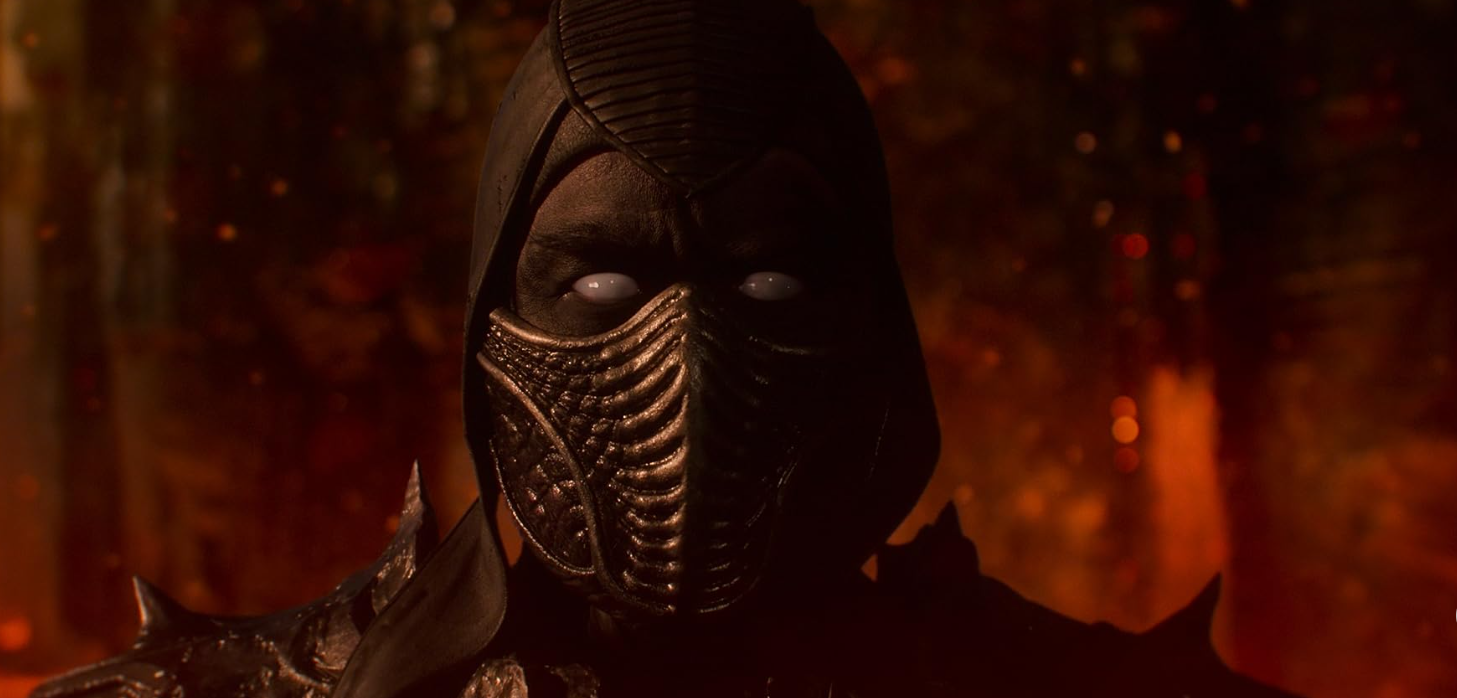
Fans were excited when it was announced in 2022 that director Simon McQuoid would return for Mortal Kombat II, the follow-up to 2021’s Mortal Kombat. Four years later, the sequel has finally arrived in theaters on May 8, 2026. The sequel brought back fan-favorite characters while also introducing several new faces from the iconic Mortal Kombat universe, including Johnny Cage, played by The Boys star Karl Urban. To help bring the story to life, screenwriter Jeremy Slater was tapped to write the script. Slater is no stranger to adapting major franchises for live-action, having previously served as writer for the limited series Moon Knight for Disney+, Netflix’s The Umbrella Academy, The Exorcist series, and Godzilla x Kong: The New Empire.
We recently spoke with Jeremy Slater about bringing Mortal Kombat II to the big screen and the long journey from its initial announcement to its theatrical release. Jeremy also opens up about the pressure of being the film’s sole writer, the emotional experience of finally seeing fan reactions, and how his own love for the Mortal Kombat games influenced his approach to the screenplay. He also discusses balancing the source material with creating something fresh for live-action, collaborating with director Simon McQuoid and the producers early in development, and why making an exciting, fast-paced Mortal Kombat movie was his biggest priority from the start.
What has that journey been like for you from the initial announcement of Mortal Kombat II to this moment where it is now in theaters?
Jeremy: We started making this, like, four years ago. It was finished last year, there was just no availability at the box office to get it out there, and then we were going to get [it out] over Halloween. And luckily, people realized this isn’t a Halloween movie, this is a big fun summer movie. The great news was that we got the slot we needed, but it also meant the movie got pushed back another seven months. So, it’s been frustrating for us. We know it was frustrating for the fans, but hopefully the weight feels like it was worth it now that it’s finally out.
What has it been like seeing the positive reactions from fans?
Jeremy: It’s been stressful, lovely, overwhelming, terrifying. It’s been everything rolled up into one. The big difference for me between Mortal Kombat II and everything else I’ve ever done, except for The Exorcist TV show, is that Mortal Kombat II is the first time where it’s been sort of my baby from start to finish. I was the only writer on this project, which is great and terrifying at the same time, because it means if the fans don’t like it, if the fans don’t respond, there’s nowhere to hide. So I had a lot of pressure going into this. I’m really, really proud of the film. I like the film. I was really excited to share it, but you just don’t know until it’s out there. I’ve seen so many reaction videos and social media posts from lifelong Mortal Kombat fans that are just happy. This is the experience that I [want] to give to other people. So it’s been incredibly rewarding and overwhelming at the same time.
Would you say the audience was on your mind, even in the early stages of writing the screenplay?
Jeremy: Yeah, absolutely, because I’m not writing a Mortal Kombat movie for me. This isn’t a personal story, I am writing something for the fans, and I consider myself one of those fans. So my goal going in was to say, if I could go back in time and show this finished movie to 14-year-old Jeremy, who’s pumping quarters into that arcade machine and is obsessed with these characters, what is the movie that would make him walk out of the theater and say that was the greatest thing I’ve ever seen in my life? So it’s not [about] trying to service the entire fan base, because I think that’s impossible. I think the fans are varied and diverse enough that they don’t all want the exact same thing in terms of tone, in terms of who lives and who dies, all you can do is make that one hypothetical perfect fan who, in my case, was 14-year-old me. And if that guy walks out happy, we hope that everyone else who shares his taste will also be walking out happy. But you don’t know if you pulled it off until it’s out there in the world. It’s been a nerve wracking year and a half where we thought we had something special on our hands. We love the movie, but you don’t know if other people will until it’s out there in theaters.

Jeremy: From the beginning, I said that the biggest cardinal sin you can make with a Mortal Kombat movie is to make a boring Mortal Kombat movie. This needs to be all gas, no brakes, all killer, no filler. We need to constantly be driving every scene forward. And nothing is more boring than a character recapping a plot for the people who are paying attention. We saw that luckily we didn’t need [that], and the story is simple and straightforward enough that the audience was engaged and they were following along.
How did you balance staying true to the original Mortal Kombat source material while also making Mortal Kombat II its own thing?
Jeremy: I think there’s two schools of thought when it comes to adapting video games or comics or anything into live-action. There’s the strict hardliners who want one-to-one fidelity. [For example], Zach Snyder’s Watchmen, where [they] recreated panels from the comic book on-screen and the dialogue is taken right from the books. It’s a one-to-one translation in a lot of cases. And then there’s the Damon Lindelof approach with the Watchmen TV show, which [used the source material] as a jumping off point, but told a new story that gave you the same feelings and same experiences you had when you read the original Watchmen for the first time. And I gravitate much more towards that end of the spectrum. That’s always the approach I try to follow.
Was there a lot of experimenting and pitching different ideas early on while developing the script?
Jeremy: Yeah, that’s exactly what I did. I handed in maybe 40 or 50 pages of what I was working on so far for everyone to give feedback on. And in those pages, I had some very different tone shifts, and that was by design, even though I didn’t tell anyone that’s what I was doing. Because one thing I have learned over my career, is that if you are not paired up with people who want to make the same movie or same TV show, it’s going to suck. It’s going to be a problem and you’re going to be fighting with each other and wasting your time and energy arguing with the person that’s supposed to be your partner, instead of combining your talent to make something great for the fans.
Jeremy: My initial approach was to have some very different scenes, some of which were very funny and tonally irreverent, and some of which were much closer adaptation. And I could look at what they were responding to. It [involved] a lot of conversations with the director, Simon McQuoid, the producers, my friends at New Line, [followed by] learning what movie they were excited to make, and then trying to deliver a script that gave them exactly what they wanted.
_
Mortal Kombat II is playing in theaters.
Follow Jeremy Slater: Instagram